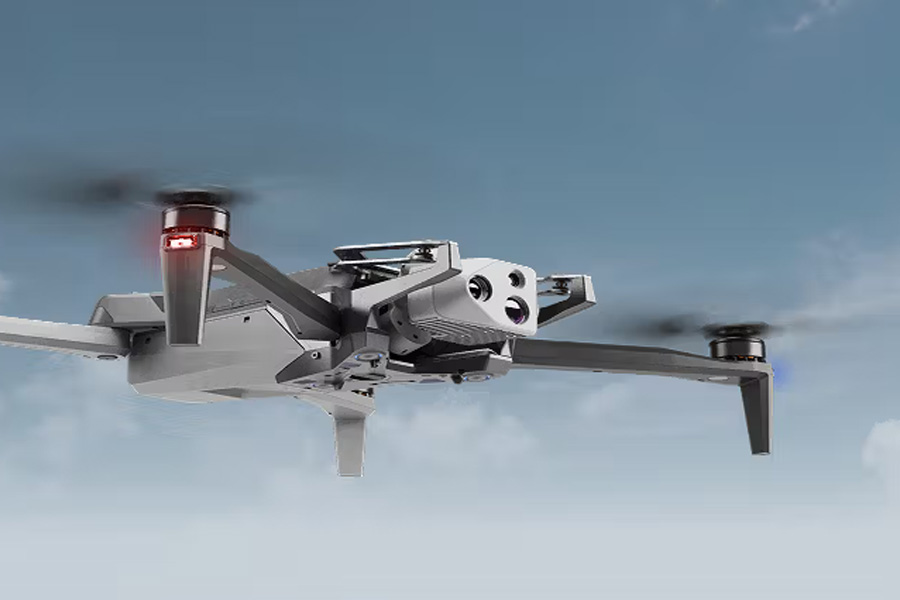
Image Source: www.skydio.com
Is the Sonoran Desert Institute worth it? For students interested in how technology is reshaping public safety, that question is central. Sonoran Desert Institute (SDI), which is accredited by the Distance Education Accrediting Commission (DEAC), offers education and training in uncrewed systems that can be applied in fields, such as law enforcement and public safety. Drones have moved from experimental tools to essential equipment in policing and tactical operations. As these agencies expand their use of aerial platforms, the need for structured education grows.
Practical preparation makes the investment worthwhile. That emphasis adds long-term value, because it prepares students to operate not just as technicians, but as trusted professionals who understand the importance of liability, customer assurance and regulatory responsibility. Graduates who internalize these standards are better equipped to protect themselves, their clients and their businesses, which can translate into stronger reputations and repeat clientele.
Expanding Capabilities in the Field
Law enforcement agencies have adopted drones for tasks that once required a significant workforce or placed officers at risk. Patrol divisions deploy them for crowd monitoring at concerts and parades, reducing the need for aerial units or extensive ground coverage. Tactical teams use drones for real-time surveillance during standoffs, allowing commanders to see inside buildings or around barricades, without exposing officers to direct fire.
Search-and-rescue operations benefit from drones equipped with infrared sensors, which detect body heat in dense forests or at night. Border patrol units rely on drones for wide-area monitoring, while urban departments use them for traffic accident reconstruction. These applications demonstrate how aerial technology extends officers’ reach and provides safer, faster situational awareness.
Incident Management and Public Safety
Drones offer significant advantages in incident management. After vehicle collisions, for example, drones can capture overhead imagery and create 3D reconstructions of the scene. This reduces the time roads remain closed, improves the accuracy of reports, and provides courts with reliable documentation. During natural disasters, drones map flood zones, assess wildfire spread or survey earthquake damage. They deliver critical data to command centers quickly, supporting efficient resource allocation.
Hazardous material incidents also illustrate their value. Drones can approach chemical spills or radiation areas, without risking human exposure. Public safety is the top priority. Reliable operation and clear protocols help drones provide benefits, while minimizing public concerns. Agencies must balance the speed and efficiency of aerial technology with a consistent commitment to privacy and accountability.
Training Requirements for Tactical Use
Operating drones in tactical settings requires more than a consumer-level pilot license. Officers must understand Federal Aviation Administration (FAA) regulations, including the Part 107 certification process, as well as state and municipal restrictions. Beyond compliance, mission planning is critical. Pilots must identify launch zones, designate emergency landing areas, and maintain a visual line of sight, unless specifically authorized.
Another key component is maintenance routines. Batteries, propellers, sensors and cameras must be inspected before and after every mission. Agencies that neglect maintenance risk failures during operations, when reliability is most critical. Recordkeeping, including flight logs and incident reports, provides accountability both internally and to regulators. This structured, disciplined approach mirrors the kind of training offered by professional education. Many prospective students evaluating whether the Sonoran Desert Institute’s cost aligns with their goals see that law enforcement applications require far more than basic drone skills.
The Connection to Education: Cost and Value
For those pursuing careers in public safety or uncrewed technology, education provides a crucial bridge between interest and application. The curriculum in uncrewed systems emphasizes flight fundamentals, safety and regulations, which are all directly relevant to law enforcement uses. Students also gain a foundation in aviation law and ethical considerations, which prepares them for the responsibilities of operating drones in sensitive environments.
When students ask, “What is the Sonoran Desert Institute cost?” The question is tied to value. Tuition covers more than technical training, as it extends to preparation for roles where lives and public trust are on the line. Graduates often find that the cost is worthwhile, since employers view structured education as a sign of real-world readiness.
Ethical and Legal Considerations
The rise of drones in law enforcement raises concerns about privacy, data handling and accountability. Communities want assurance that surveillance tools are used responsibly, and with proper oversight. Departments must adopt clear policies that balance operational benefits with civil liberties. Transparency in how data is collected, stored and shared is vital to maintaining public trust.
Ethical decision-making is not optional. A drone may be able to hover over private property, but should it? A mission may legally allow extended surveillance, but does it respect constitutional protections? These questions highlight why education is essential. Professionals trained to consider both technical and ethical dimensions are better prepared to serve the public responsibly.
Student Perspectives
Students often share how their perception of drones changed after formal training. One alumnus explained, “I wasn’t sure if the Sonoran Desert Institute cost was worth it. Once I studied mission planning and learned how drones are applied in tactical operations, I realized the value of structured education. It wasn’t just about flying. It was about operating in a way that earned public trust.”
Another graduate noted that understanding compliance and privacy concerns gave them confidence when applying for jobs in law enforcement support roles. These stories illustrate how education prepares students not only to operate drones, but to navigate the responsibilities that come with them.
The Future of Public Safety and Responsible Flight
Drones have become central to modern law enforcement and emergency response. They enhance visibility, support faster decision-making, and reduce risks for both officers and civilians. Yet with these capabilities comes an equal responsibility to operate within the boundaries of law, safety and ethics. Structured education helps professionals meet that standard, turning technical skill into dependable service.
For students asking whether Sonoran Desert Institute is worth the cost, the answer rests in preparation. Training that emphasizes compliance, mission planning and ethical decision-making creates professionals who are trusted to use technology with care and purpose. In public safety, that trust is everything. As drone technology continues to evolve, those who pair knowledge with responsibility will be best equipped to lead its future.
About the Author