Key Takeaways
- Montessori playgroups encourage social skills through child-led interaction and calm environments
- Mixed-age settings help children develop empathy, patience, and confidence
- Independence in daily tasks supports stronger communication and peer relationships
- Local settings like a Bukit Batok playgroup reinforce community and familiarity
- Observing a Montessori classroom can reveal how social learning happens naturally
Watching young children learn how to share, take turns, and express their feelings can feel almost magical. These early interactions shape how they relate to others for years to come. In Singapore, many parents are turning to Montessori playgroups for this very reason. The approach feels gentle, thoughtful, and surprisingly practical when it comes to social development.
Unlike structured classrooms that rely on rigid routines, Montessori environments are intentionally calm and child-led. That atmosphere sets the stage for real social learning to happen naturally.
Social Learning Starts With Freedom and Structure
At a Montessori preschool in Singapore, children are given freedom within clear boundaries. That balance matters. It allows little ones to choose activities, approach peers on their own terms, and learn what cooperation actually looks like in practice.
In a Montessori playgroup in Singapore, social skills are not taught through lectures or forced group tasks. Instead, they grow through shared experiences. A child may watch another carefully complete a puzzle, then decide to join in. Another might wait patiently for a turn with a favourite activity. These moments seem small, but they add up.
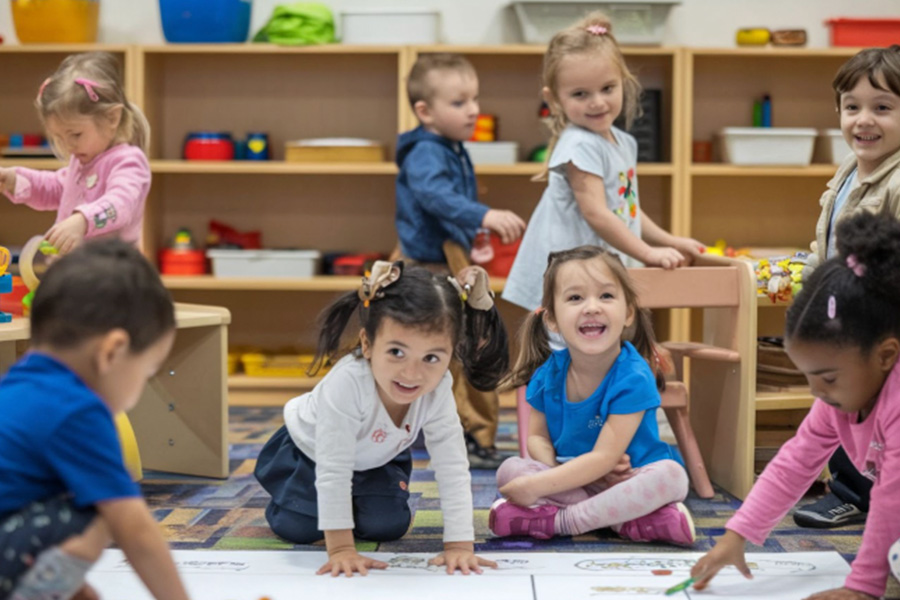
The classroom itself encourages calm interaction. Low shelves, open spaces, and child-sized furniture make movement easy and non-confrontational. It feels less crowded, less rushed, and that reduces friction between children.
Learning to Communicate Without Pressure
Communication is more than talking. It includes listening, observing, and responding appropriately. Montessori educators understand this well. Rather than stepping in too quickly, they observe first. This gives children time to work through minor disagreements or misunderstandings on their own.
In a Montessori playgroup in Singapore, teachers model respectful language and behaviour. Children hear phrases like “May I have a turn?” or “I’m still using this,” repeated calmly. Over time, these phrases become part of a child’s natural vocabulary.
Interestingly, quieter children often thrive here. Without loud group instructions or constant competition, they find space to express themselves. That confidence carries into other settings, including at home and in public spaces.
Mixed-Age Settings and Peer Learning
One feature that often surprises parents is mixed-age interaction. Younger children learn by watching older ones, while older children practise patience and leadership. This dynamic is common in a Montessori preschool in Singapore and plays a big role in social growth.
It may sound counterintuitive, but mixed ages reduce comparison. Children focus less on keeping up and more on contributing in their own way. When a child helps a peer pour water or tidy up, empathy develops almost without effort.
In neighbourhoods like Bukit Batok, this approach feels especially relevant. A Bukit Batok playgroup often brings together families from the same community, creating familiarity beyond the classroom. Children see familiar faces at the playground or the nearby mall, reinforcing social comfort in everyday life.
Independence Builds Confidence, Confidence Builds Connection
Montessori education places a strong emphasis on independence. Children learn to put on their own shoes, clean up after activities, and choose work that interests them. This sense of capability matters more than it seems.
A confident child is more likely to approach others, suggest ideas, and handle small setbacks without frustration. In a Montessori preschool in Singapore, independence is not rushed. It is encouraged gently, respecting each child’s pace.
Parents often notice changes at home, too. Children from a Montessori playgroup in Singapore may start using more polite language or show greater patience with siblings. These are social skills spilling over into daily life, which is exactly the point.
Local Context Matters More Than Expected
Singapore’s fast-paced lifestyle can sometimes spill into early education. Montessori settings tend to slow things down. That slower rhythm suits many families, especially those looking for balance.
A Bukit Batok playgroup, for instance, often reflects the diversity of the neighbourhood. Children interact with peers from different backgrounds, learning respect and adaptability early on. These experiences mirror real life in Singapore, where social harmony matters.
Seasonal celebrations, simple cultural activities, and shared routines help children understand community. They learn that social skills are not just classroom concepts, but everyday habits.
Choosing the Right Environment for Social Growth
Not every child responds the same way to every setting. Some need more structure, others need space. Montessori environments sit somewhere in between, which explains their appeal.
When considering a Montessori preschool in Singapore, it helps to observe a class in action. Watch how children interact, how teachers guide without dominating, and how calm the space feels. These details often speak louder than brochures.
A Montessori playgroup in Singapore is not about producing outspoken children overnight. It is about nurturing thoughtful, socially aware individuals over time. That patience can be reassuring.
Conclusion
Social skills do not develop through instruction alone. They grow through experience, observation, and gentle guidance. Montessori playgroups create an environment where children feel safe to explore relationships at their own pace. From mixed-age learning to calm communication, the approach supports social development in ways that feel natural and lasting. Parents considering a Bukit Batok playgroup or a Montessori preschool in Singapore may find this method aligns well with long-term social and emotional goals. Schedule a visit with Brighton Montessori today and start the conversation.
About the Author